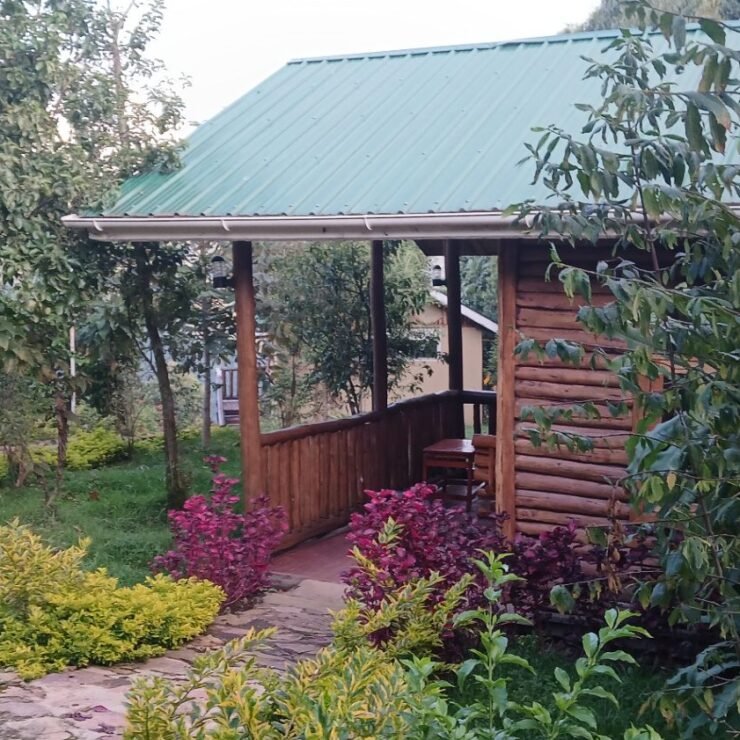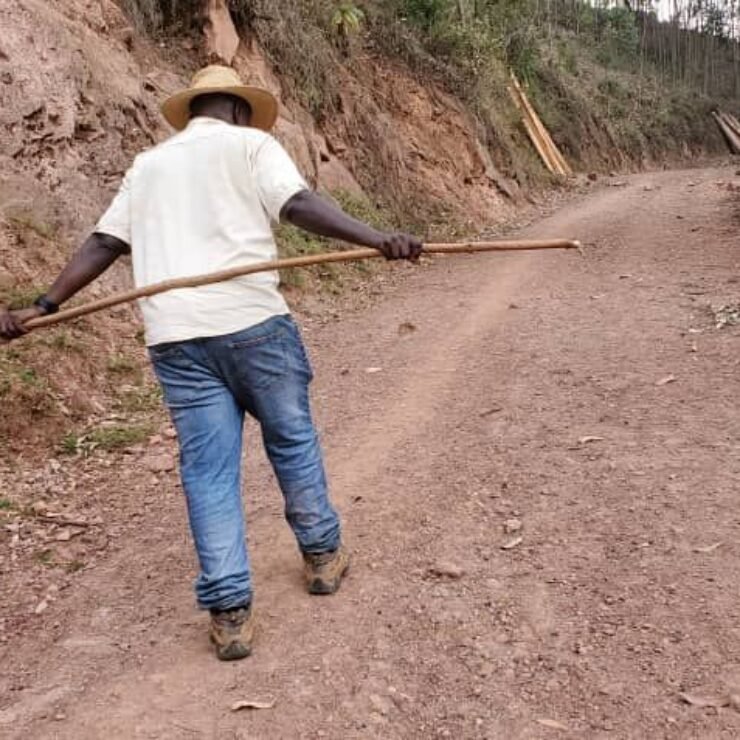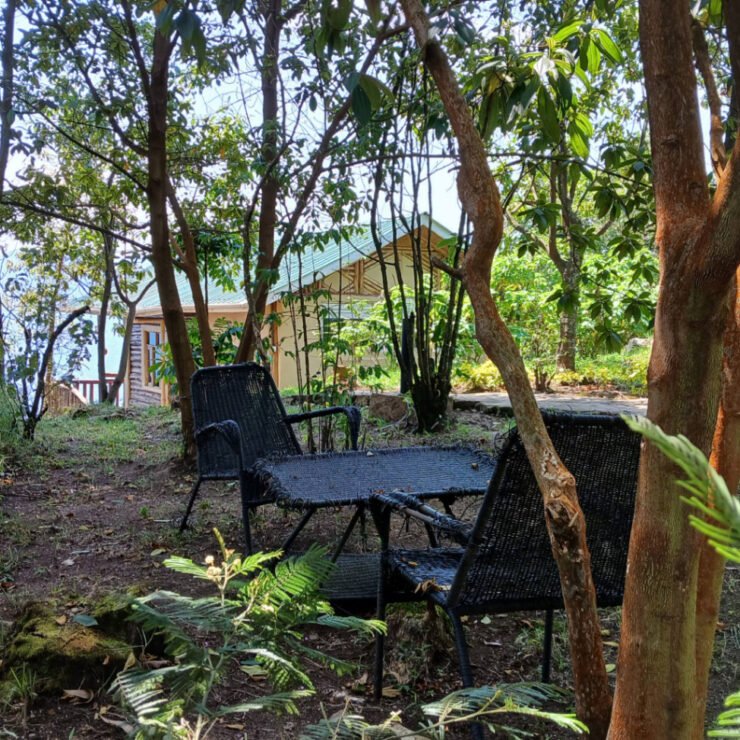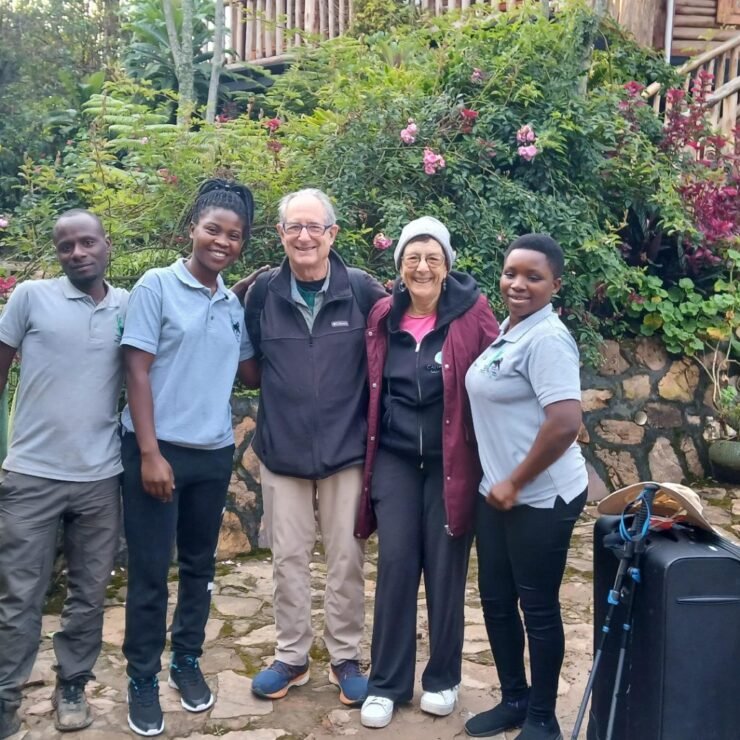

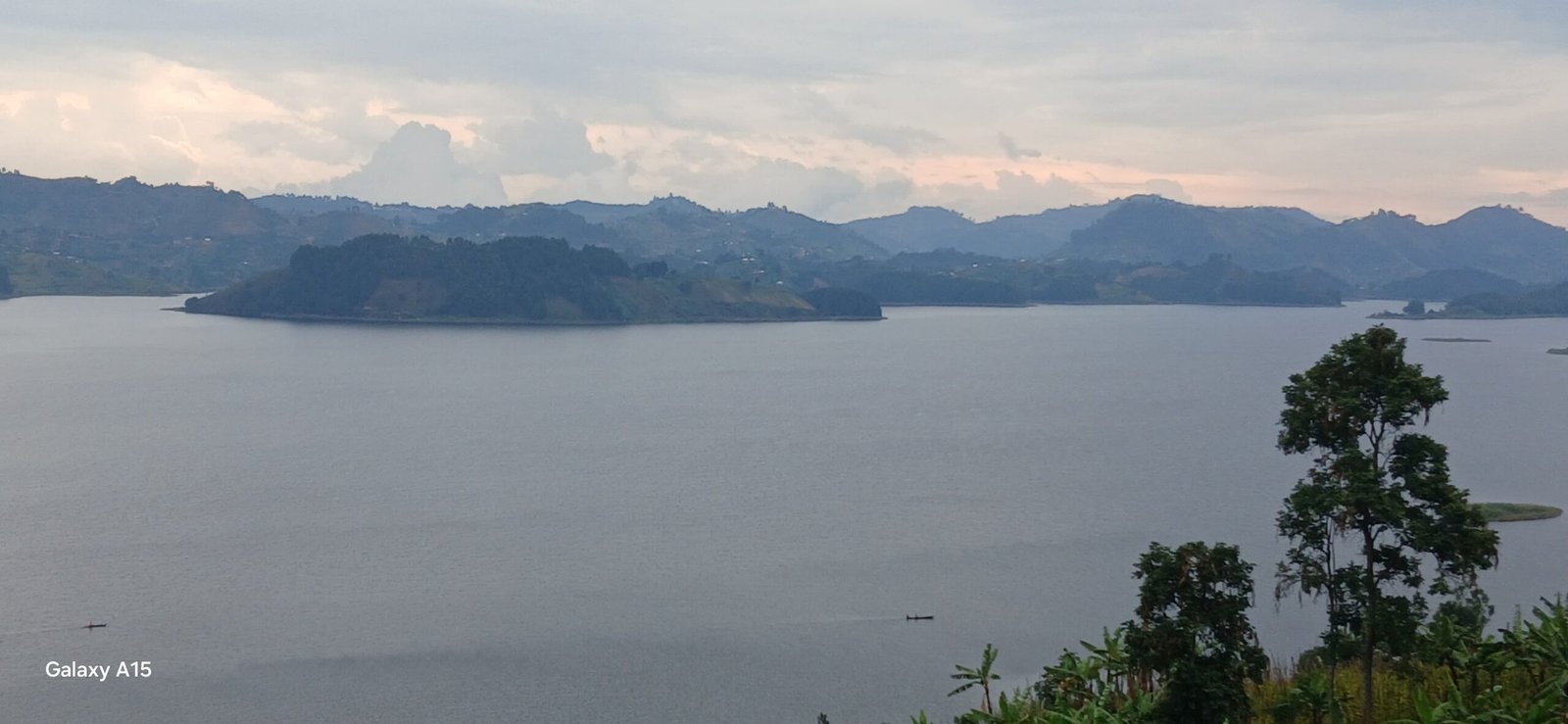
During a June 2026 scouting visit, Lake Mutanda gave us still water, low mist, and that unmistakably cold highland air before the crossing began.
Lake Mutanda activities start the moment you reach the shore at 7:00 AM. The first thing you’ll notice isn't actually the breathtaking scenery. It’s the cold. The mist rolls off the Virunga Volcanoes like a heavy velvet curtain, settling over the glass-still water. You will definitely need a fleece and a windbreaker before you even think about stepping into a canoe.
Most travelers treat Bwindi as a "one-and-done" destination: arrive, see the gorillas, and dash out. But staying in the Nkuringo sector offers something deeper. This area is the soul of the forest, where the Natural Simplicity of the landscape dictates the pace of life.
Whether you’re looking for a "warm-up" before your trek or a way to decompress after, exploring Lake Mutanda near Bwindi is non-negotiable. From the dark history of the islands to the rhythmic slow-burn of a walking safari, this guide covers the best Lake Mutanda activities and the wider Things to Do in Bwindi beyond the forest floor.
At Orugano Bwindi Lodge, Lake Mutanda is one of our favourite recommendations for guests looking to experience the landscapes, culture, and history beyond gorilla trekking. We handle all the logistics, from the 4×4 transfer to the private local guides, making these Lake Mutanda activities feel easy rather than overplanned.
Lake Mutanda Activities: The New Nkuringo Walking Safari
The standard transit from Kisoro town to the southern gates of Bwindi is, frankly, a bit of a grind. You spend three hours in a 4×4, bouncing over dusty rocks and seeing nothing but the back of your driver’s head. We decided there was a better way.
Lake Mutanda is approximately 15 kilometres from the lodge, or about a 30-minute drive in normal conditions. It is close enough to feel effortless, but far enough to give you a completely different perspective on Gorilla Trekking in Nkuringo and the southern Bwindi highlands. If you are planning this outing, the dry months from June to September and December to February usually offer the best experience, with clearer volcano views, easier trails, and more comfortable lake conditions.
We’ve mapped out a 4-hour Lake Mutanda canoe safari and walking route that turns a boring transit day into a legitimate highlight of your trip. For guests looking into Lake Mutanda activities, this is one of the most rewarding ways to start. Instead of a dusty road, your journey begins on a muddy bank just outside Kisoro.
You won’t find a fancy pier here; you’ll step into a traditional wooden dugout or a motorized canoe. We prefer the motorized version for this crossing: Lake Mutanda is massive (it actually has a larger surface area than Lake Bunyonyi), and we want to keep things efficient. You’ll spend about 45 minutes on the water, with the three main volcanoes: Muhabura, Gahinga, and Sabinyo: creating a jagged, epic skyline to your left.
Once you land near the village of Rubuguli, the "walking" part of the safari begins. This 9-kilometer trek moves through agricultural fields, patches of eucalyptus forest, and steep terraced hills. By the time you crest the final ridge and see the ancient green wall of Bwindi, you’ll be ready for a cold drink at Orugano Bwindi Lodge.
 During a recent scouting visit, the papyrus wetlands and mountain views gave this transfer its real character: less “drive day,” more slow, scenic arrival into Nkuringo.
Why Lake Mutanda Has Uganda's Best Volcano Views
If you ask us, the Virunga volcano views from Lake Mutanda are some of the finest in Uganda. Not “pretty nice if the weather behaves” fine. Proper, stop-talking-for-a-second fine. The lake opens up a wide-angle stage for the Lake Mutanda volcanoes, with Muhabura views usually stealing the show while Gahinga and Sabinyo complete the backdrop.
This is what gives the canoe safari its edge. You are not just moving across water; you are gliding beneath one of East Africa’s most dramatic mountain skylines, with Muhabura, Gahinga, and Sabinyo rising behind the reeds, farms, and islands. For guests staying in Nkuringo, it is one of the easiest ways to appreciate the volcanic geography that shapes this whole corner of southwestern Uganda.
Muhabura brings that near-perfect cone that instantly grabs your eye. Gahinga sits broader and quieter beside it, while Sabinyo adds its rugged, broken outline to the scene. Together, they create a skyline that feels almost too cinematic to be casual about, especially in the clear morning light.
Because the lake sits open and low against the surrounding hills, the views feel expansive rather than blocked. On a good day, every paddle stroke seems to reveal a new angle on the volcanoes, whether you are crossing by canoe, standing in the papyrus edges, or stopping for photos along the walking route.
 Photographed by the Orugano team during a scouting visit to Lake Mutanda in June 2026.
Exploring the Lake Mutanda Islands
There are roughly 15 Lake Mutanda islands, and each has a story. Most are just clumps of emerald greenery, but a few carry a weight you can feel as you paddle past.
The Dark History: Punishment Island Lake Mutanda
One of the most requested stops on a Lake Mutanda canoe tour is "Punishment Island," locally known as Akampene. Decades ago, the local Bakiga people practiced a strict social code. If an unmarried girl became pregnant, she was seen as bringing shame to her family and threatening the bride price value attached to marriage arrangements.
Her punishment was brutal. She would be taken by boat to this tiny, uninhabited island and abandoned there to die of starvation or drowning. Since many people in the highlands did not know how to swim, escape was almost impossible. It was a cruel practice, meant as both punishment and warning.
There is also another layer to the story. Local accounts say that some men who could not afford a bride price would watch the island from a distance and quietly rescue one of the abandoned girls, taking her as a wife. It does not make the history any less painful, but it does show how social and economic pressures shaped life around the lake.
It’s a sobering, silent place. We don’t land on the island out of respect, but we paddle close enough for you to see the terrain. It’s a powerful reminder of how much the culture here has evolved, and our local guides tell these stories with a level of nuance you won't find in a guidebook.
Cultural Immersion: Mudfish and Papyrus
While you are staying at the lodge, we highly recommend taking a day to engage with the community. This isn't "tourist theater": it’s a raw look at life in the Bwindi highlands, and it is one of the more meaningful Lake Mutanda activities if you want something beyond scenery.
Mudfishing with Local Kids
As you paddle through the papyrus reeds in the northern swamps, you’ll likely see local kids standing knee-deep in the silt. They aren't just playing; they are working. They use simple hand lines to catch mudfish, a staple protein in the region.
If you are traveling with family, we can arrange for your kids to join them. There are no "catch and release" ethics here; if they catch it, it’s for dinner. It’s a blunt, hands-on lesson in how the world works, usually accompanied by a lot of splashing and laughter.
 Photographed by the Orugano team during a scouting visit to Lake Mutanda in June 2026.
The Art of Papyrus Weaving
The edges of Lake Mutanda are thick with papyrus. For the women in nearby villages, this isn't just a plant: it’s a vital resource. During our stops near Rubuguli, you can watch (and try!) papyrus weaving. The stalks are split, dried, and woven into intricate baskets. It’s a slow, methodical process that requires serious finger strength. Buying a basket here ensures the money goes directly to the weaver, bypassing the city gift shops.
 Photographed by the Orugano team during a scouting visit to Lake Mutanda in June 2026.
Logistics: Is This Trek Right for You?
Before you book the Lake Mutanda from Nkuringo walking safari or any of our lake activities, let’s talk about the operational reality. We believe in being honest so you can enjoy the experience. Some Lake Mutanda activities are wonderfully straightforward, but they are still better with the right timing and proper shoes.
The best time to visit is during the dry months: June to September and December to February. During the rains, the roads can get slippery, the trails become muddier, and the trekking feels noticeably more demanding. Charming in photos, yes. Slightly less charming under your boots.
- The Distance: Lake Mutanda is just 15 kilometres from Orugano Bwindi Lodge, which makes it an easy half-day or full-day add-on without turning your itinerary into a logistical puzzle.
- The Transfer Time: In normal conditions, the drive takes about 30 minutes each way.
- The Duration: The full canoe and walking route takes about 4 hours.
- The Fitness Level: The hike involves a steep ascent on dirt paths. You’ll gain several hundred meters in elevation. It’s a great "warm-up" for Gorilla Trekking in Nkuringo, but you need shoes with a solid grip.
- The Weather: At this altitude, if it rains, you will get wet. The canoes have no roofs. We provide ponchos, but the wind can still make it a chilly ride.
- The Timing: If you’re using this route to reach the lodge before your trek the next day, we start at 8:00 AM sharp to ensure you arrive before dark.
Why Many Guests Stay an Extra Night in Nkuringo
A lot of travellers book two nights in Bwindi because they are focused on trekking logistics. Fair enough. But three nights in Nkuringo usually creates a much better rhythm, especially if you want to enjoy several Lake Mutanda activities without turning the trip into a checklist.
With an extra night, you can do your gorilla trek without squeezing everything else into the edges of the trip. It gives you time to experience Lake Mutanda, add a community walk, enjoy birding around the highlands, or even consider the Gorilla Habituation experience if you want more time in the forest. It also helps if you are comparing routes like Rushaga vs Nkuringo and want a stay that feels less rushed and more grounded.
That extra day often changes how people experience the region. Instead of ticking off one headline activity and moving on, you begin to understand the landscapes, the villages, and the slower pace that makes southern Bwindi memorable.
Photography Tips for Lake Mutanda
If Lake Mutanda is already photogenic in your imagination, yes, it is even better in person. A little planning helps though.
- Best light: Aim for 6:30 AM to 9:00 AM, when the mist is still hanging low and the light feels soft rather than harsh.
- Best volcano visibility: Dry season mornings usually give you the clearest outlines of Muhabura, Gahinga, and Sabinyo.
- Best cultural photography: Villages, canoe landings, and papyrus wetlands tend to offer the most natural human moments, especially when local activity is already underway.
- Best practical tip: Bring a dry bag for the canoe crossing. The lake looks calm until your camera gets splashed. Then suddenly it feels very personal.
Natural Simplicity at Orugano Bwindi Lodge
After a day on the water and a climb through the terraces, there is nothing quite like returning to a room that feels like it belongs to the forest. Our guest rooms are designed with Natural Simplicity in mind: handcrafted wooden furniture, large windows, and a calm atmosphere that lets the landscape do the talking.
After exploring the lake and hills, guests return to Orugano for a warm shower, a hot meal, and that quiet sense of relief you only get after a proper day outside. Back in Nkuringo, the volcano bases are often more visible from the lodge side, and with a good pair of binoculars, the wider highland details come into even better focus. It is a different perspective from Lake Mutanda, but that is exactly the point: the day keeps unfolding even after you are back at the lodge.
You can check our Luxury Bwindi Accommodation to plan your stay. Whether you’re here for the gorillas or the serenity of the lake, we make sure the experience is authentic.
Ready to Explore?
Lake Mutanda isn't just a place to look at; it’s a place to move through. Whether you want to challenge yourself with the 4-hour hike or just want a quiet morning on a Lake Mutanda canoe tour, the variety of Lake Mutanda activities means we can build it into your custom itinerary without forcing the pace.
Ready to book your Bwindi adventure? Contact us today to check availability for our local guides and walking scouts. If you're planning Gorilla Trekking in Nkuringo, exploring Luxury Bwindi Accommodation, comparing Rushaga vs Nkuringo, or browsing more Things to Do in Bwindi, we’ll help shape a stay that feels easy, scenic, and genuinely local. If you're on a honeymoon, let us know: we can arrange a private lunch overlooking the volcanoes after your canoe crossing.
Frequently Asked Questions
Is it safe to swim in Lake Mutanda?
Yes! Unlike many other African lakes, Lake Mutanda is free of crocodiles and hippos, and it is considered bilharzia-free. It’s a perfect spot for a refreshing dip after a long hike.
How far is Lake Mutanda from Nkuringo?
Lake Mutanda is about 15 kilometres from Orugano Bwindi Lodge, which is roughly a 30-minute drive in normal conditions. However, our walking safari takes you directly from the lake shore up into the Nkuringo ridges over the course of about 3 to 4 hours.
Do I need a permit for the Lake Mutanda canoe tour?
You don't need a national park permit like you do for gorillas, but you do need a local guide and a boat. We handle all the logistics and payments for our guests to ensure the local community is supported directly.
What should I pack for Lake Mutanda activities?
Layers are key. Start with a fleece for the misty morning, but wear a moisture-wicking shirt underneath for the hike. Don't forget sunscreen, a hat, sturdy hiking boots with good ankle support, and a dry bag if you are planning any canoe-based Lake Mutanda activities.