
Gorilla Habituation Experience
What Is the Gorilla Habituation Experience?
Mountain gorillas are inherently wild animals. When researchers discover a new wild gorilla group that has never had contact with humans, the animals are naturally defensive, wary, and prone to fleeing or displaying warning behaviours when humans approach.
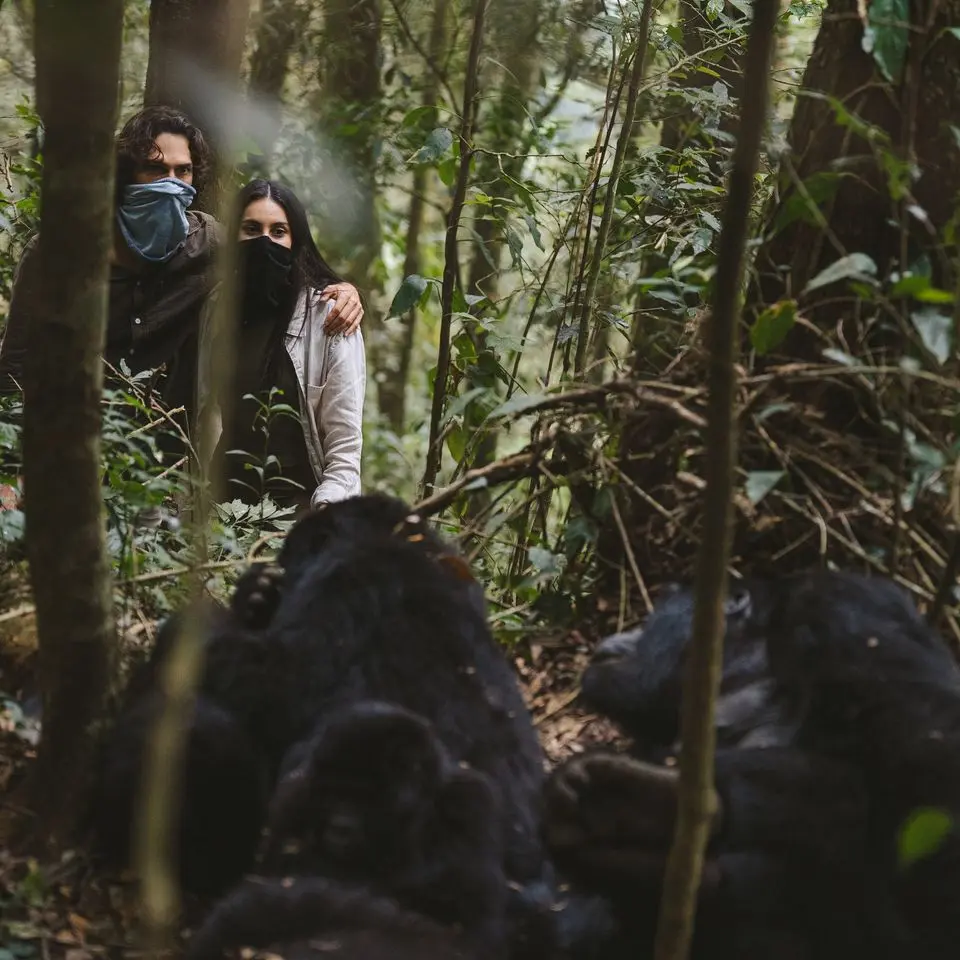
Habituation is the careful, methodical, multi-year process of gently introducing these wild gorillas to the presence of human researchers, trackers, and conservationists. This is not about taming or domesticating them; rather, it is about teaching the gorillas that humans pose no threat to their troop. This delicate process typically takes between two to three years of daily, patient observation. Researchers, armed trackers, and veterinarians visit the group every single day, slowly shortening the distance between themselves and the gorillas until the animals go about their daily routines — feeding, resting, grooming, and nursing infants — completely unbothered by human presence.
By allowing a maximum of four visitors to join researchers during this advanced stage of habituation, the Uganda Wildlife Authority (UWA) generates critical conservation funding while accelerating the gorillas’ trust-building process. Uganda is the only country in the world where visitors can join this conservation-led process, and it happens only in the Nyabaremura section of the Rushaga sector in southern Bwindi.
Gorilla Trekking vs Gorilla Habituation
Choosing between standard trekking and the habituation experience is one of the most common dilemmas for travellers planning a safari in Uganda. Here is how the two compare:
| Feature | Gorilla Trekking | Gorilla Habituation Experience |
|---|---|---|
| Time with Gorillas | Exactly 1 hour | Up to 4 immersive hours |
| Gorilla Group Type | Fully habituated families accustomed to visitors | Semi-habituated groups currently undergoing training |
| Daily Group Size | Up to 8 visitors per group (across 17 habituated families in Bwindi’s four sectors) | Strictly 4 visitors per group |
| Permit Cost | $800 per person | $1,500 per person (rising to $1,800 from 1 January 2027) |
| Permit Availability | More availability across multiple sectors | Highly restricted — Rushaga only |
| Physical Demand | Moderate to high depending on family location | High, due to longer hikes and tracking semi-wild movements |
| Best Suited For | First-time visitors, families, and casual hikers | Photographers, repeat visitors, and wildlife enthusiasts |
What Happens During the Experience?
A habituation day feels more like a field expedition than a standard wildlife activity. Because you are tracking a semi-habituated family in the Nyabaremura section of Rushaga, the route can shift with the gorillas’ movements, though recent road extensions at Nyabaremura have helpfully reduced the walking approach distance compared with the past.
UWA maintains an office at Rubuguli, a key starting point situated midway between Nkuringo and Rushaga. For guests staying at Orugano Bwindi Lodge, this means only about 20 minutes by road to the habituation starting point, compared with roughly 40 minutes for standard Rushaga trekking.
Typical Timeline of the Day
| Time | Activity |
|---|---|
| 6:45 AM | Morning briefing & health check at sector headquarters |
| 7:00 AM | Transfer to trailhead (Nyabaremura / Rubuguli) |
| 7:30 AM | Begin forest hike with researchers & armed rangers |
| 10:00 AM | Locate semi-habituated gorilla family |
| 10:00 AM – 2:00 PM | Four immersive hours observing troop behaviour with researchers |
| 2:00 PM | Return trek through the forest |
| 4:00 PM | Arrival at headquarters, debriefing, and certificate presentation |
Once the gorillas are located, the pace changes completely. You slow down, stay quiet, and spend four remarkable hours observing feeding, resting, play, movement, and the subtle work of habituation that visitors on a standard trek never quite get to see.
Why Four Hours Changes Everything
One hour goes by in a flash. During standard gorilla trekking, the pressure to snap photos and absorb the surreal surroundings often means the hour is over before you have even caught your breath. Four hours changes the entire dynamic of the encounter — you move past the initial adrenaline rush and enter a state of deep observation, witnessing the full spectrum of gorilla social life:
- Feeding Dynamics: Watch juveniles forage expertly through wild celery and stinging nettles while mothers supervise.
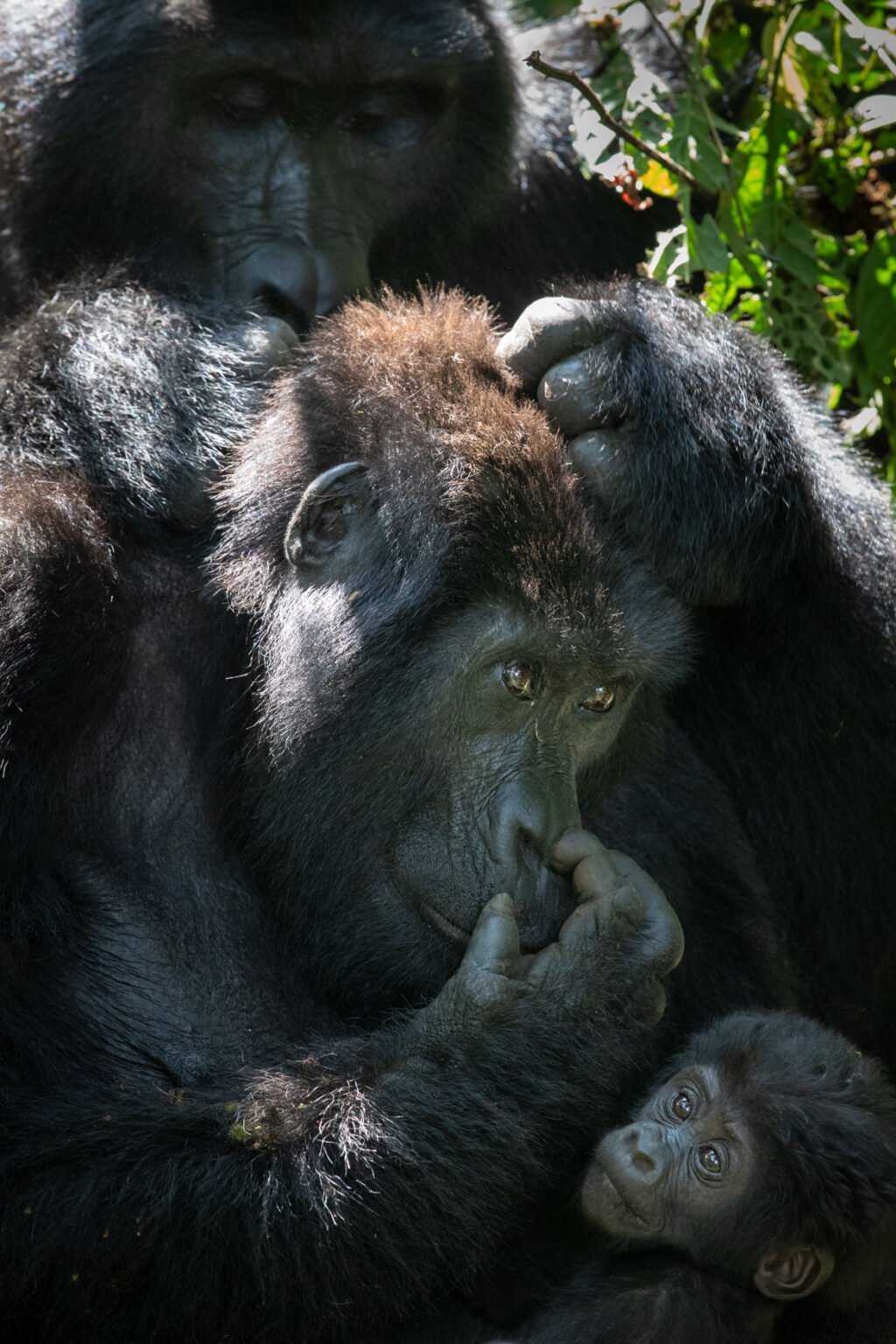
- Grooming Rituals: Observe quiet moments of social bonding as troop members pick through each other’s fur.
- Dominance and Leadership: Witness the subtle body language of the silverback as he commands respect and directs the family’s movements.
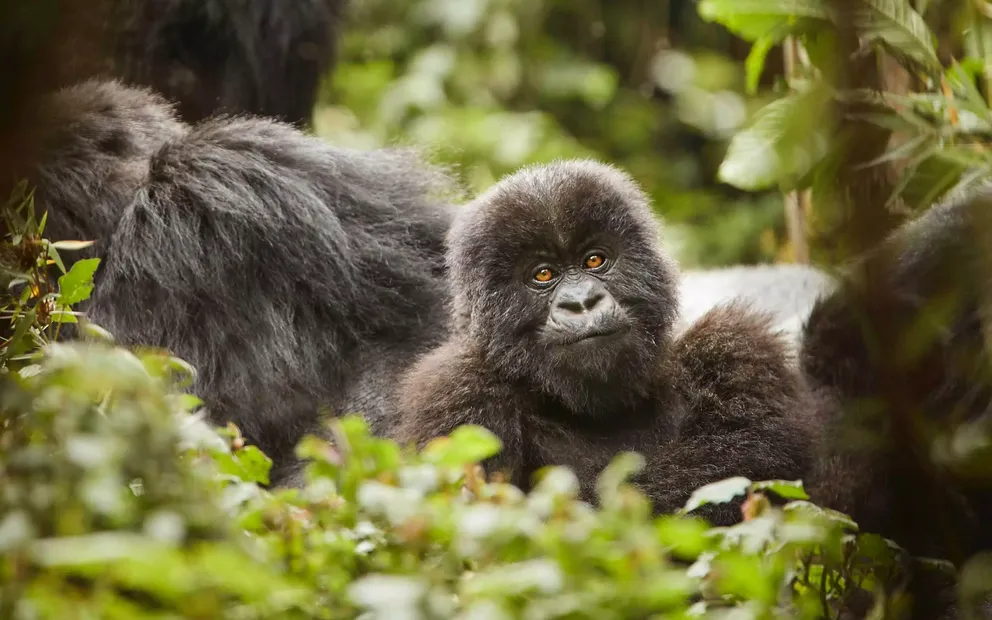
- Playful Antics: Enjoy extended stretches of young infants tumbling, wrestling, and swinging from hanging vines.
- Nest Building: Late in the afternoon, watch the troop begin snapping branches and weaving fresh ground nests for the night.
- Scientific Insight: Listen to researchers noting behavioural shifts as the semi-habituated family gradually relaxes in your presence over hours rather than minutes.
Why Gorilla Habituation Costs More
Travellers frequently ask why the habituation permit costs $1,500 (rising to $1,800 from 1 January 2027), compared to the $800 standard trekking permit. The higher price reflects several factors:
- Extreme Exclusivity: Only one gorilla family per day in the Rushaga sector is open for habituation, with group sizes capped at just 4 visitors — a tiny handful of people worldwide each day.
- Dedicated Scientific Support: Your fee directly funds a team of researchers, veterinarians, trackers, and armed rangers who spend every daylight hour year-round monitoring, protecting, and habituating the troop.
- Intensive Conservation Impact: Bwindi’s mountain gorilla population has steadily rebounded thanks directly to community-based conservation funded by permit fees.
- Extended Ranger Allocation: Rangers spend significantly more time guiding and protecting visitors during a 6 to 10-hour expedition compared to standard 3-hour treks.
Is Gorilla Habituation Worth It?
With a higher permit price and more demanding physical requirements, is the habituation experience worth the investment? For the right traveller, absolutely.
Perfect For
- Wildlife Photographers: Four hours provides ample time to set up shots, adjust lenses, wait for ideal light, and capture genuine behavioural interactions without rushing.
- Repeat Visitors: Travellers who have already done standard gorilla trekking and want a deeper, more intimate encounter.
- Conservation Enthusiasts: Those eager to see firsthand how field researchers collect data and protect endangered species.
- Patient Nature Lovers: Travellers who relish remote wilderness exploration and a long, rugged hike.
Maybe Not Ideal For
- Families with Young Children: The strict minimum age is 15, and the physical endurance required makes it unsuitable for younger kids.
- Travellers on a Strict Budget: Standard trekking offers an incredible experience at nearly half the permit cost.
- Visitors with Limited Time: Tracking semi-wild groups can take longer, so you need a flexible itinerary with buffer days.
Is Gorilla Habituation Difficult?
Bwindi lives up to its name — an impenetrable maze of steep mountain ridges, dense tropical undergrowth, tangled vines, and slippery, rugged terrain. Because habituation groups are still adjusting to humans, they often roam deeper into rugged terrain and higher altitudes than fully habituated families. Expect:
- Steep Ascents and Descents: Navigating muddy slopes where sturdy hiking boots and gardening gloves are essential.
- Variable Weather: Tropical downpours can occur at any moment, turning trails into slick mud.
- Physical Exertion: Hikes can range from 3 to 8 hours round-trip. Solid cardiovascular fitness and a positive mental attitude go a long way.
For practical conditioning tips, see our guide on How Difficult is Gorilla Trekking in Bwindi.
What Should I Pack?
- Clothing: Neutral-coloured, long-sleeved shirts and trousers (khaki, olive, or brown) to protect against stinging nettles, thorns, and biting insects. Avoid bright colours or camouflage.
- Footwear & Gaiters: Waterproof, broken-in hiking boots with ankle support, paired with canvas gaiters to keep mud and safari ants out of your socks.
- Rain Gear: A lightweight waterproof rain jacket or poncho and a waterproof backpack cover.
- Hand Protection: Heavy-duty gardening gloves for gripping thorny vines and branches on steep slopes.
- Hydration & Energy: At least 2–3 litres of water plus high-energy snacks like dried fruit, nuts, or energy bars.
- Walking Stick: Usually provided at the trailhead briefing point — invaluable on muddy descents.
- Photography Gear: A weather-sealed camera with extra batteries and memory cards. A zoom lens (e.g. 70–200mm) works well; leave heavy tripods behind.
Best Time for Gorilla Habituation
| Season | Weather | Terrain | Photography & Visibility | Permit Availability |
|---|---|---|---|---|
| December – February (Dry) | Warm, mostly sunny with occasional showers | Drier trails, easier footing | Excellent lighting through canopy gaps | Extremely limited; book 9–12 months ahead |
| March – May (Long Rains) | Heavy tropical downpours | Very muddy, slippery slopes | Lush green foliage; dramatic mist | Easier availability |
| June – August (Dry) | Cool, crisp mornings; minimal rain | Firmer trails; manageable hikes | Stunning mountain clarity | Highly competitive; book well in advance |
| September – November (Short Rains) | Intermittent rain showers | Damp conditions; lush undergrowth | Vibrant greens; fewer tourists | Moderate availability |
For seasonal planning insights, see our Best Time to Visit Bwindi guide.
Where Does Gorilla Habituation Take Place?
Gorilla habituation in Uganda takes place in the Nyabaremura section of the Rushaga sector, in southern Bwindi Impenetrable National Park. Many travellers hear “Rushaga” and assume the logistics are identical to standard trekking — they are not.
UWA has an office at Rubuguli, which serves as a key starting point for habituation operations, sitting midway between Nkuringo and Rushaga. For guests at Orugano Bwindi Lodge, it is only about a 20-minute drive to the habituation starting point, compared with around 40 minutes for standard Rushaga trekking. Many international travellers fly into Kigali International Airport, since the cross-border transfer to southern Bwindi is faster and more practical than the longer road journey from Entebbe.
Permit Essentials
- Cost: $1,500 per person (rising to $1,800 from 1 January 2027). Contact us for current UWA tariff confirmation and availability.
- Booking Timeline: We strongly recommend booking 6 to 12 months in advance, especially for the peak dry seasons (June–August or December–February).
- Booking Process: Permits can be purchased directly through the Uganda Wildlife Authority or secured through our local team, with support for accommodation at Orugano Bwindi Lodge.
- Cancellation Policy: UWA enforces strict cancellation and rescheduling policies. Comprehensive travel insurance is essential in case unexpected events disrupt your travel dates.
Rules During Gorilla Habituation
- Distance Rule: Maintain a distance of at least 7 metres (22 feet) from the gorillas at all times, though curious juveniles may occasionally approach closer.
- No Flash Photography: Sudden flashes can startle or stress the gorillas.
- Health Check: If you show symptoms of a cold, flu, or any airborne illness, you will not be permitted to trek. Gorillas share about 98% of human DNA and are extremely vulnerable to human respiratory illnesses.
- Mask Requirement: Wear a surgical face mask when in close proximity to the gorillas.
- No Eating or Drinking: Prohibited near the gorillas, to prevent disease transmission.
- Leave No Trace: Pack out all garbage, food wrappers, and tissue paper.
- Follow Ranger Instructions: Always obey the instructions of your armed rangers and researchers instantly and quietly.
Sample Safari Itineraries
To help you plan your journey, explore safari packages designed around southern Bwindi access:
- 3-Day Gorilla Habituation Safari: A focused short safari with private transport from Kigali, southern Bwindi lodge accommodation, and your full-day habituation experience.
- 4-Day Habituation + Golden Monkeys: Combines a full day with semi-habituated gorillas in Rushaga with golden monkey tracking in neighbouring Mgahinga Gorilla National Park.
- 5-Day Habituation + Chimpanzees: Blends Bwindi gorilla habituation with chimpanzee tracking in Queen Elizabeth National Park or Kibale Forest.
- 7-Day Uganda Primates Safari: A multi-destination expedition covering savannah wildlife, chimpanzees, and a four-hour gorilla encounter.
Sample 5-Day Itinerary: Nkuringo Trek + Rushaga Habituation
One base, two sectors, zero compromise — here is a sample itinerary our guests love, combining a classic Nkuringo trek with the Rushaga habituation experience from one lodge:
- Day 1: Arrive at Orugano Bwindi Lodge. Settle in, enjoy dinner with Virunga views, and get a full night’s rest.
- Day 2: Gorilla trekking in the Nkuringo sector — the classic one-hour encounter, a short walk from the starting point.
- Day 3: Recovery day. Explore the local Batwa community, take a nature walk, or relax on your balcony.
- Day 4: The main event — Bwindi gorilla habituation in Rushaga. We arrange your early transfer for four extraordinary hours with a semi-habituated family.
- Day 5: Departure, forever changed.
This approach gives you both experiences without the exhaustion of constant relocations, using Orugano Bwindi Lodge as a consistent home base.
Frequently Asked Questions
Is gorilla habituation worth the $1,500–$1,800 permit fee?
Yes. For photographers, repeat visitors, and conservation enthusiasts, having four hours with a semi-habituated troop offers an unmatched, immersive wildlife experience that justifies the premium price.
Can absolute beginners participate in gorilla habituation?
Beginners with a solid level of physical fitness can participate, but because habituation hikes are often longer and more strenuous than standard treks, some preparation is recommended.
Is gorilla habituation safe?
Yes. Armed park rangers and experienced researchers accompany every group, and strict safety protocols are maintained throughout the experience.
Can children participate in habituation?
No. The strict minimum age limit for gorilla habituation and trekking in Uganda is 15 years.
How close do you get to the gorillas?
Visitors maintain a respectful distance of at least 7 metres, though inquisitive young gorillas may occasionally move closer under the watchful eye of the silverback.
Is tipping expected for guides and rangers?
Tipping is not mandatory, but it is customary and appreciated. $20–$50 per day for your ranger guides, trackers, and porters is a fair way to reward their hard work.
Which lodge is closest to the Rushaga briefing point?
Orugano Bwindi Lodge is ideally situated in southern Bwindi, offering a comfortable, boutique eco-luxury base a short drive from the Rushaga park gates and about 20 minutes from the Rubuguli/Nyabaremura habituation starting point.
Can I combine habituation with standard gorilla trekking?
Absolutely. Many travellers book a 4- or 5-day itinerary combining one day of habituation with one day of standard trekking to experience two different gorilla families — see our sample 5-day itinerary above.
Should I stay one or two nights?
We recommend at least two nights. Arriving the day before ensures you are well-rested for an early morning briefing, and a second night lets you relax after your hike without rushing.
Is Rwanda or Uganda better for habituation?
Uganda is the only country in East Africa that offers the Gorilla Habituation Experience. Rwanda’s Volcanoes National Park only offers standard one-hour gorilla trekking.
Can I use a drone in Bwindi Impenetrable National Park?
No. Drones are strictly prohibited inside all Ugandan national parks to protect wildlife from stress and noise pollution.
What camera lens should I bring?
A versatile zoom lens such as a 70-200mm f/2.8 or a 24-70mm lens works well in the varying light of the dense forest canopy.
Can elderly travellers do the habituation experience?
Elderly travellers with good cardiovascular health and stamina can participate, especially with the assistance of local porters who provide support along the trails.
What happens if it rains during the trek?
Trekking proceeds rain or shine. Waterproof gear, rain jackets, and sturdy boots will keep you comfortable during tropical mountain downpours.
Can habituation permits sell out?
Yes. With only four permits available per day in the Rushaga sector, permits sell out many months in advance, particularly during the dry season peaks.
Is there a porter service available?
Yes. Professional local porters are available for hire at the trailhead. Hiring a porter supports local community livelihoods and provides invaluable assistance on steep slopes.
Planning a Gorilla Habituation Experience? Tell us your travel dates, and we will help secure your permit, recommend the right Bwindi lodge, and build a personalised itinerary from Kigali or Entebbe. Get in touch with our safari experts today to start designing your East African wildlife journey.
Gorilla Habituation Tour Prices
Starts from $ 2700 per person for an unforgettable experience.
Gorilla Habituation Permit Price
Costs $1,500 per person, rising to $1,800 from 1 January 2027. Required for the trek.
Best Trekking Season
Ideal months are June to August and December to February.
Quick Facts
- Location: Nyabaremura (Rushaga Sector), southern Bwindi Impenetrable National Park
- Duration: Full day (6–10 hours)
- Time with Gorillas: Up to 4 hours
- Permit Cost: $1,500 (rising to $1,800 from 1 January 2027)
- Maximum Visitors: Strictly 4 per group
- Minimum Age: 15 years
- Difficulty: Strenuous (rugged terrain, steep ascents, mud)
- Best Time: June to August & December to February
- Closest Airport: Kigali International Airport (approximately 4–5 hour scenic drive)
- Closest Lodge: Orugano Bwindi Lodge (20 minutes to Rubuguli / Nyabaremura starting point)
Orugano Bwindi Lodge
Why Stay at Orugano Bwindi Lodge
For habituation guests, practical details matter as much as comfort. At Orugano Bwindi Lodge, we shape the stay around early starts, muddy boots, and the kind of post-trek recovery you actually appreciate.
- 20-Minute Access to Rubuguli / Nyabaremura: A shorter morning transfer than many southern Bwindi alternatives.
- Early, Customised Breakfasts: Pre-dawn breakfasts tailored for early departures.
- Complimentary Packed Gourmet Lunches: Ideal for a full day in the forest with researchers and rangers.
- Professional Boot-Cleaning Service: Because Bwindi mud is memorable enough without taking it into your room.
- Complimentary Guided Village Walk: Available for guests staying two or more nights.
- Private Deck Sunset Views: Panoramic sunset views over the Virunga mountain range, with the volcanic glow of Congo’s Nyiragongo and Nyamuragira sometimes visible on clear nights.
- 5.0 Guest Rating: 14 private cottages with handcrafted wooden furnishings, en-suite facilities, and private balconies for post-trek decompression.